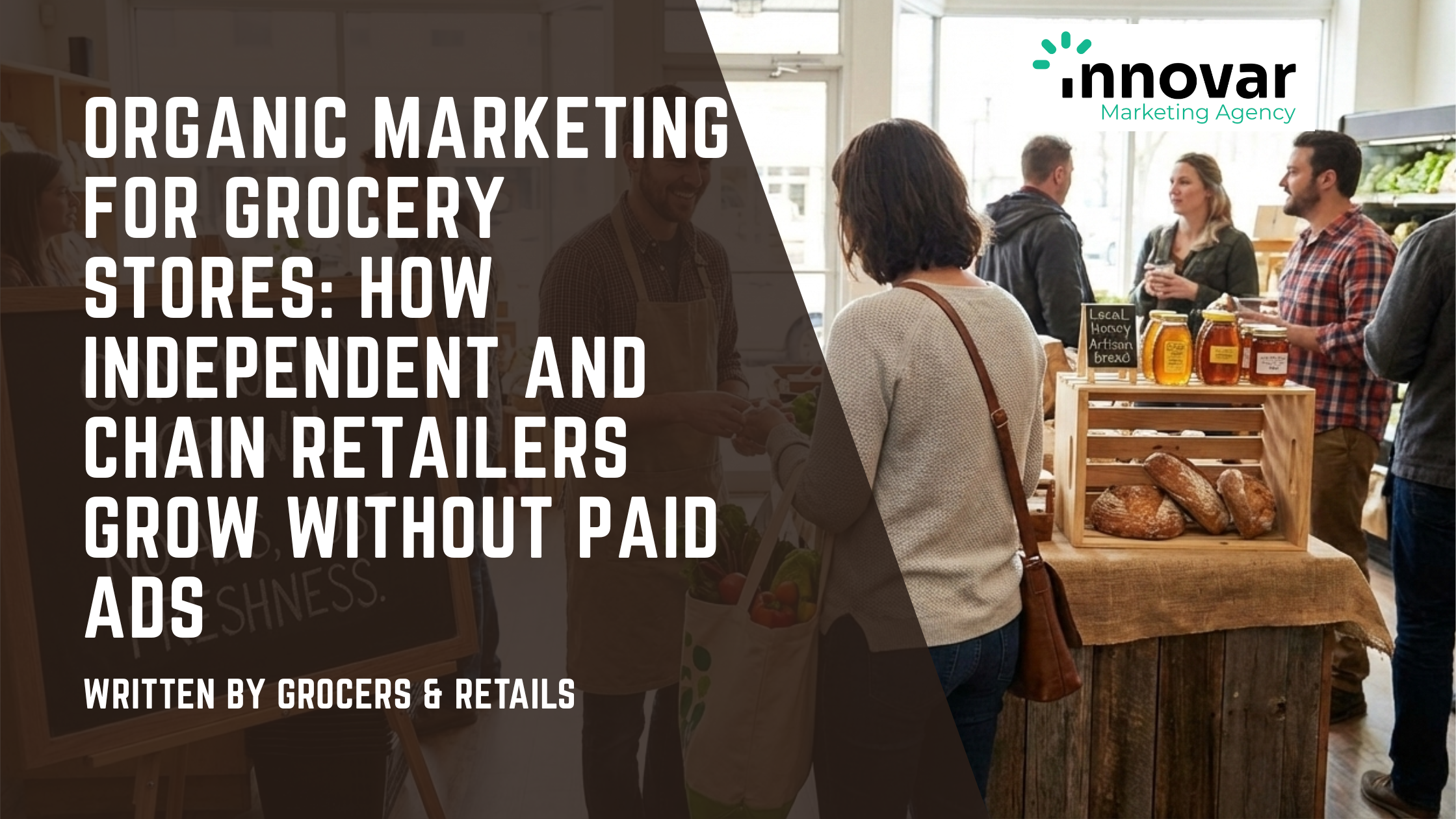
Organic Marketing for Grocery Stores: How Independent and Chain Retailers Grow Without Paid Ads
By George Goodwin
Marketing a grocery store doesn’t have to mean spending thousands on ads every month. In fact, many of the fastest-growing independent grocers and regional chains are winning customers through organic marketing—without relying heavily on paid ads.
In this guide, we’ll break down what organic marketing really means for grocery stores, why it works in 2025–2026, and how both independent and chain retailers can grow sustainably without burning ad budgets.
If you run a grocery store—whether it’s a single family-owned shop or a regional chain—you know the pain of the "ad spend" trap. You pay Facebook or Google thousands of dollars to show your weekly flyer to locals. Traffic bumps up a little bit. Then you stop paying, and the traffic vanishes instantly. That is the problem with paid ads: You are renting attention, not owning it.
In 2025, the smartest retailers are flipping the script. They are building Organic Marketing engines that drive foot traffic, build loyalty, and increase basket size without spending a dime on ad placement.
What Is Organic Marketing for Grocery Stores?
Organic marketing is all about earning attention instead of buying it.
For grocery stores, that means growing through:
Local SEO
Google visibility
Social media content
Community engagement
In-store execution
Word of mouth (digital + physical)
Unlike paid ads, organic strategies compound over time, creating long-term visibility and trust.
“Consumers trust organic search results 8x more than paid ads.” – BrightEdge
Why Organic Marketing Works So Well for Grocery Stores
Grocery shopping is local, habitual, and trust-based.
People search for:
“Grocery store near me”
“Organic grocery store”
“Best local grocery”
“Fresh produce near me”
If your store shows up organically, you win foot traffic without paying for every click.
Key Benefits of Organic Marketing
Lower long-term costs
Higher trust
Consistent foot traffic
Better loyalty
Stronger community presence
Strategy #1: Local SEO Is the Foundation
If You’re Not Ranking Locally, You’re Invisible
Local SEO is the most powerful organic marketing tool for grocery stores.
This includes:
Google Business Profile optimization
Location-based keywords
Reviews and ratings
Accurate store info (NAP consistency)
46% of all Google searches are looking for local information.
Action Steps
Optimize your Google Business Profile weekly
Use keywords like:
“local grocery store”
“organic grocery near me”
“independent grocery store”
Encourage happy customers to leave reviews
Strategy #2: Content That Answers Real Shopper Questions
Grocery Content Isn’t About Blogging for Fun
It’s about answering what shoppers already search for:
“What’s the healthiest snack?”
“What’s trending in grocery right now?”
“What is kombucha powder?”
“Best organic products for families”
Content Ideas That Work
Blog posts about grocery trends
Product education content
Health and wellness guides
Local food features
Companies that blog consistently get 67% more leads than those that don’t.
Strategy #3: Social Media Without Paid Ads (Yes, It Works)
Organic Social Is a Discovery Engine
Platforms like TikTok and Instagram are free discovery tools for grocery stores.
Shoppers love:
New product finds
Behind-the-scenes store content
Staff picks
Local brands
You don’t need polished ads—authentic content wins.
What to Post
New arrivals
Trending products
Customer favorites
In-store walkthroughs
Vendor spotlights
Strategy #4: In-Store Experience Is Organic Marketing
Your Store Is Your Biggest Marketing Asset
Everything inside your store sends a message:
Shelf organization
Pricing accuracy
Tags and signage
Product placement
Scan coordinators, pricing coordinators, reset teams, and merchandisers play a huge role in organic growth.
Poor shelf execution leads to lost trust—and lost sales.
Action Steps
Keep shelves clean and organized
Use clear shelf-edge communication
Highlight trending and high-margin items
Make discovery easy
Strategy #5: Community & Local Partnerships Drive Growth
Local Always Wins in Grocery
Independent grocers especially thrive when they:
Support local brands
Partner with local creators
Show up at community events
Feature local products in-store and online
This builds emotional loyalty—something ads can’t buy.
Strategy #6: Email & SMS Still Matter (When Done Right)
Organic doesn’t mean outdated.
Email and SMS are still powerful when they:
Share weekly specials
Highlight new products
Promote seasonal items
Educate, not just sell
These channels keep your store top of mind without ad spend.
Key Takeaways: Organic Grocery Marketing That Actually Works
Local SEO drives consistent foot traffic
Content builds trust and authority
Social media creates free product discovery
In-store execution is silent marketing
Community engagement builds loyalty
Organic strategies compound over time
Own Your Audience: Build an email list and social following so you aren't dependent on ad budgets.
Be Helpful: Content that educates (recipes, tips) travels further than content that just sells.
Go Local: Tag other local businesses (coffee shops, farms) in your posts to cross-pollinate audiences.
FAQs: Organic Marketing for Grocery Stores
Can grocery stores really grow without paid ads?
Yes. Many independent and regional grocery stores grow consistently using local SEO, content, social media, and community marketing.
What’s the most important organic strategy?
Local SEO. If your store doesn’t show up in Google Maps and local search, you’re losing customers daily.
How long does organic marketing take to work?
You’ll see small wins in 30–60 days, with strong momentum building over 3–6 months.
Is organic marketing better for independent grocers or chains?
Both. Independents benefit from community trust, while chains benefit from scale and consistency.
Do grocery stores still need social media?
Absolutely. Social platforms are where shoppers discover new products before they buy.
Final Thoughts: Sustainable Growth Beats Short-Term Ads
Paid ads stop the moment you stop paying.
Organic marketing keeps working.
For grocery stores looking to grow smarter—not louder—organic strategies are the future.
Ready to Grow Your Store the Real Way?
You don't need a million-dollar budget to compete. You need a strategy that connects. At Innovar Marketing Agency, we help grocers build organic growth engines that last. If you want to grow your grocery store or CPG brand without relying on paid ads, Innovar Agency can help.
👉 Visit www.innovaragency.com to learn how we help grocery retailers:
Rank locally on Google
Build organic visibility
Improve in-store execution
Turn content into foot traffic and sales
Let’s grow your store the smart, sustainable way.