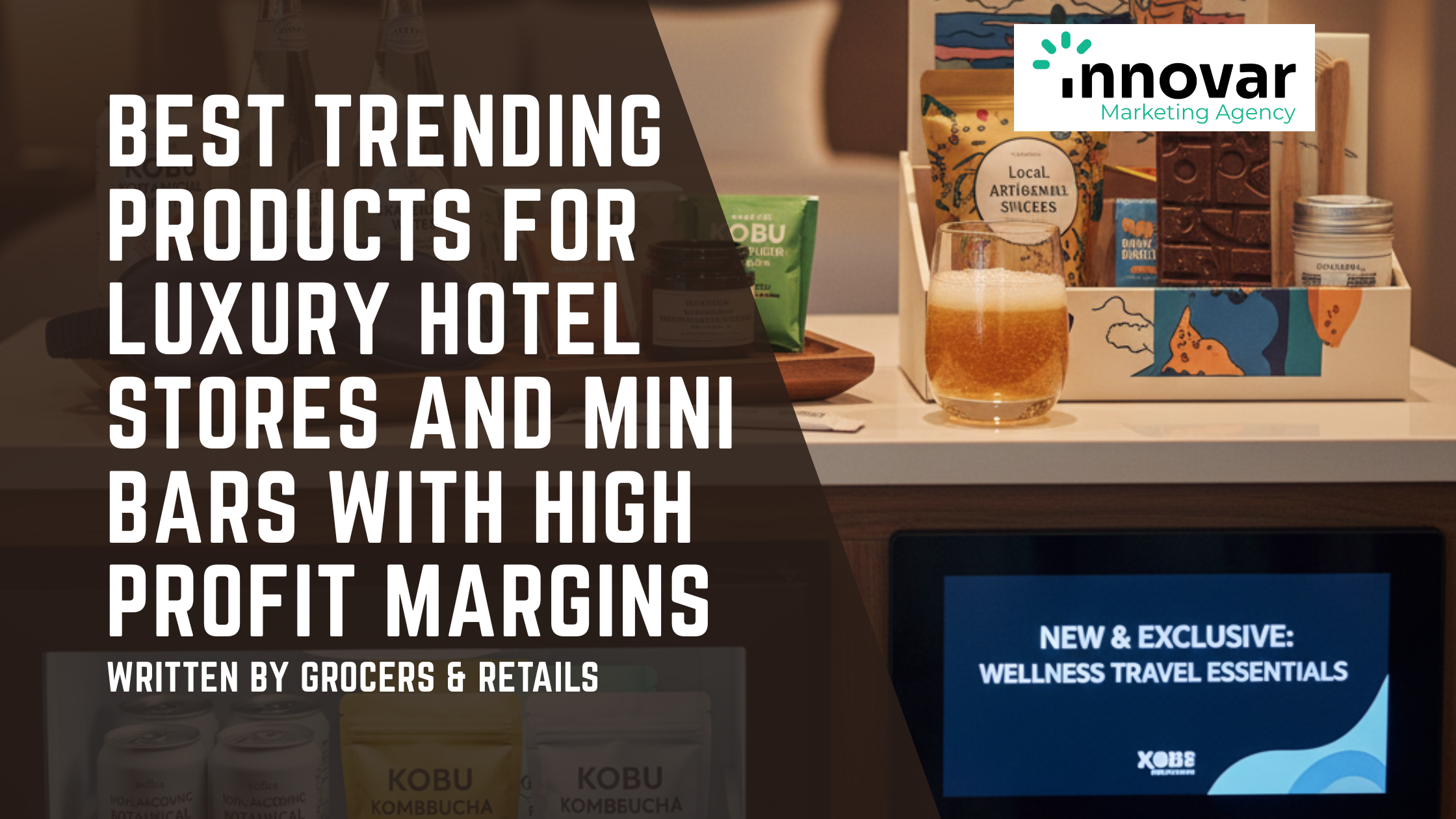
Best Trending Products for Luxury Hotel Stores and Mini Bars With High Profit Margins
By George Goodwin
Luxury hotel guests don’t shop the same way they do at a regular grocery store. They want convenience without compromise, premium products, clean ingredients, and items that feel intentional—not generic. That’s why hotel stores and mini bars are quietly becoming high-margin retail engines when stocked with the right products. In this guide, we’ll break down the best trending products luxury hotels are carrying right now, why they work, and how hotels can maximize profit per square foot.
If you manage a boutique hotel or a luxury resort, I have a hard truth for you: Your guests are bored with your Toblerone bars. The modern luxury traveler is obsessed with wellness, locality, and convenience. When they check into their room after a 6-hour flight, they aren't looking for a sugary soda. They are looking for hydration, sleep support, and guilt-free indulgences.
As a CPG strategist, I help brands get into these high-value spaces. The secret isn't just raising prices; it's raising the value. Here are the best trending products for 2025 that offer massive profit margins and actually make guests happy.
1. Shelf-Stable "Recovery" Drinks (The Hangover Cure)
We recently discussed the power of Kobu Kombucha Powder and other shelf-stable wellness items. This is where they shine. Travelers are often dehydrated, jet-lagged, or recovering from a night out.
The Trend: Functional Hydration.
The Product: Stick packs of electrolytes, powdered kombucha (like Kobu), or magnesium drink mixes.
The Profit Margin: A single stick pack costs you pennies to stock but sells for $5-$8 because the guest sees it as a "solution" to their dehydration, not just a drink.
2. The "Sleep Tourism" Kit
"Sleep Tourism" is one of the biggest travel trends of 2025. People are booking hotels specifically to catch up on rest. Does your mini bar help them sleep?
The Products:
Magnesium Sprays: For muscle relaxation after a long flight.
Sleep Tea Sachets: Premium, organic blends (chamomile, valerian root).
Silk Eye Masks: A high-ticket item that guests often forget to pack.
Why it sells: You aren't selling a product; you are selling a good night's sleep. That is priceless to a tired traveler.
3. Local & Artisanal Snacking (The "Taste of Place")
If I am staying at a luxury hotel in Santa Barbara, I don't want a bag of Lays chips I can get at a gas station in Ohio. I want local flavor.
The Strategy: Curate snacks from local makers within a 50-mile radius.
Examples: Local olive oil crackers, small-batch jerky, or artisanal chocolate bars wrapped in artwork by local artists.
The ROI: Guests view these as "souvenirs" they can eat. They are willing to pay a premium (often 300-400% markup) because it feels exclusive.
4. Mocktails & Sober-Curious Options
Not everyone wants a tiny bottle of vodka. The "Sober Curious" movement is massive, especially among Gen Z and Millennials.
The Trend: Premium Non-Alcoholic Spirits.
The Product: Cans of prebiotic soda (like Poppi or Olipop), non-alcoholic Negronis, or CBD-infused sparkling water.
The Benefit: These items signal that your hotel is inclusive and modern. Plus, they often have better margins than liquor because you avoid the heavy alcohol taxes.
"Hotels that curate their retail offerings with local and wellness-focused products see an average increase of 25% in ancillary revenue per guest. The mini bar is no longer a utility; it is a discovery zone." — Innovar Hospitality Insights 2025
5. Eco-Friendly "Emergency" Essentials
Plastic is out. Sustainable luxury is in. Forget the cheap plastic toothbrush. Stock your hotel store with high-end, eco-friendly essentials that guests might have forgotten.
The Products: Bamboo toothbrushes, solid toothpaste tabs, reef-safe sunscreen (in tin jars), and biodegradable makeup wipes.
The Vibe: It tells the guest, "We care about the planet as much as you do." It turns a boring necessity purchase into a "feel good" purchase.
What Makes a Product “Perfect” for Luxury Hotel Stores?
Before diving into product categories, it’s important to understand what actually sells in hotel environments.
The Luxury Hotel Shopper Mindset
Hotel guests are:
Time-poor
Experience-driven
Less price-sensitive
Willing to pay for convenience
“Hotel retail margins often outperform traditional retail because guests value immediacy and experience over price.”
That means hotels should prioritize products that are:
Premium but compact
Shelf-stable
Easy to understand
High perceived value
1. Functional Wellness Beverages (High Margin, High Demand)
Wellness is no longer optional—it’s expected.
Why Functional Drinks Win in Hotels
Guests want:
Gut health support
Hydration after flights
Clean energy without crashes
Trending options include:
Kombucha powders
Electrolyte sticks
Mushroom-based energy blends
Adaptogenic drink mixes
These products:
Don’t require refrigeration
Are lightweight for storage
Command premium pricing
Wellness beverage powders can deliver 60–70% gross margins in hospitality retail.
2. Premium Single-Serve Snacks With Clean Labels
Forget generic chips and candy bars.
Luxury hotels are shifting toward better-for-you indulgence.
Top-Selling Snack Categories
Dark chocolate with functional benefits
Protein or energy bites
Low-sugar or keto-friendly snacks
Organic nut blends
Guests feel good about purchasing—and hotels enjoy higher margins than traditional snack SKUs.
3. Travel-Friendly Gut Health & Digestive Products
Jet lag, bloating, and digestion issues are common for travelers.
Why Gut Health Products Perform So Well
Guests actively look for:
Probiotics
Digestive support
Gentle daily wellness solutions
Compact formats like:
Powder sticks
Sachets
Capsules
…fit perfectly into mini bars and hotel retail shelves.
4. Premium Hydration & Electrolyte Products
Hydration is a top post-flight concern.
Why Electrolytes Beat Bottled Water
Instead of bulky water bottles, hotels are adding:
Electrolyte sticks
Mineral hydration powders
Zero-sugar hydration blends
These products:
Take less space
Have longer shelf life
Increase revenue per guest
5. Elevated “Impulse Luxury” Items
Impulse buying is powerful in hotels—especially late at night.
High-Performing Impulse Products
Luxury chocolate bars
Artisan candies
Small-batch cookies
Premium nut butters
Placed near checkout or inside mini bars, these items consistently convert.
6. Eco-Friendly & Sustainable Essentials
Today’s luxury guest cares about sustainability.
What’s Trending
Refillable wellness products
Compostable packaging
Clean-label, responsibly sourced snacks
Hotels that highlight sustainability often see higher guest satisfaction scores alongside increased retail sales.
How Hotels Maximize Profit From These Products
Smart Merchandising Tips
Use eye-level placement
Group products by use case (sleep, energy, digestion)
Keep descriptions simple and benefit-driven
“Clear benefit-based merchandising increases hotel retail conversion rates by up to 30%.”
Key Takeaways for Hotel Owners & Operators
Luxury hotel retail thrives on convenience + wellness
Functional beverages and powders offer some of the highest margins
Shelf-stable products reduce waste and logistics costs
Guests happily pay for premium, clean, and travel-friendly items
Mini bars can become profit centers—not just amenities
Solve Problems: Stock items that fix jet lag, sleeplessness, and hangovers.
Go Local: Replace big-box snacks with local artisans to justify premium pricing.
Ditch the Glass: Use premium powder sticks (like Kobu) to save space and reduce breakage risk.
FAQs – Luxury Hotel Store & Mini Bar Products
What products have the highest profit margins in hotel mini bars?
Functional beverage powders, premium snacks, and wellness items often deliver the highest margins due to low cost-to-serve and strong perceived value.
Should hotels still stock traditional mini bar items?
Some classics still work, but modern guests prefer better-for-you, premium alternatives.
How do I prevent theft in the mini bar?
Technology. Many modern mini bars use sensor technology to charge automatically. If you don't have that, focus on the "Honor Bar" concept but place it on a beautiful tray. Psychology shows that presenting items like a gift rather than a commodity reduces theft.
What is a good profit margin to aim for?
For luxury hotels, you should aim for 65% to 85% margins. Guests expect a markup for convenience, but the quality must justify it. You can't charge $10 for a $1 chocolate bar, but you can charge $12 for a local artisanal truffle bar.
Should I brand the products with the hotel logo?
Generally, no. Guests trust established local brands or cool niche brands more than "Hotel Generic Brand." Co-branding is okay (e.g., "Kobu x The Ritz"), but let the product brand lead.
Final Thoughts: Hotel Retail Is Evolving
Luxury hotels are no longer just places to sleep—they’re curated lifestyle experiences.
The most successful hotel stores and mini bars focus on:
Wellness
Convenience
Premium storytelling
When done right, hotel retail becomes a high-margin extension of the brand.
Upgrade Your Hotel's Retail Experience
At Innovar Marketing Agency, we don't just help grocery stores; we help hospitality brands turn their lobbies and rooms into revenue generators. From sourcing the coolest CPG brands to designing the shelf layout, we make your mini bar memorable. Want help selecting, positioning, and marketing high-margin products for hotel stores and mini bars? Partner with Innovar Agency. We help hotels, retailers, and CPG brands turn trending products into profitable retail experiences—on shelf and online.
🌐 Explore Innovar Marketing Agency → innovaragency.com