Why Velocity is the Only Metric Independent Grocers Care About (And How to Drive It)
By George Goodwin
In the world of retail, there is a lot of noise. You’ll hear about brand awareness, social media impressions, and "aesthetic appeal." But as a fourth-generation grocer and the founder of Innovar Marketing Agency, I’m going to tell you a secret: When you’re talking to an independent grocer, they only care about one thing. Velocity.
If your product sits on the shelf for more than a few days without moving, it’s taking up space that could be making them money. In 2026, where the Attention Economy is more competitive than ever, you have about three seconds to get a shopper to pick up your product. If you don't, you're out. Here is why velocity is king and how you can make sure your brand is the one flying off the shelves.
What is "Velocity" Anyway?
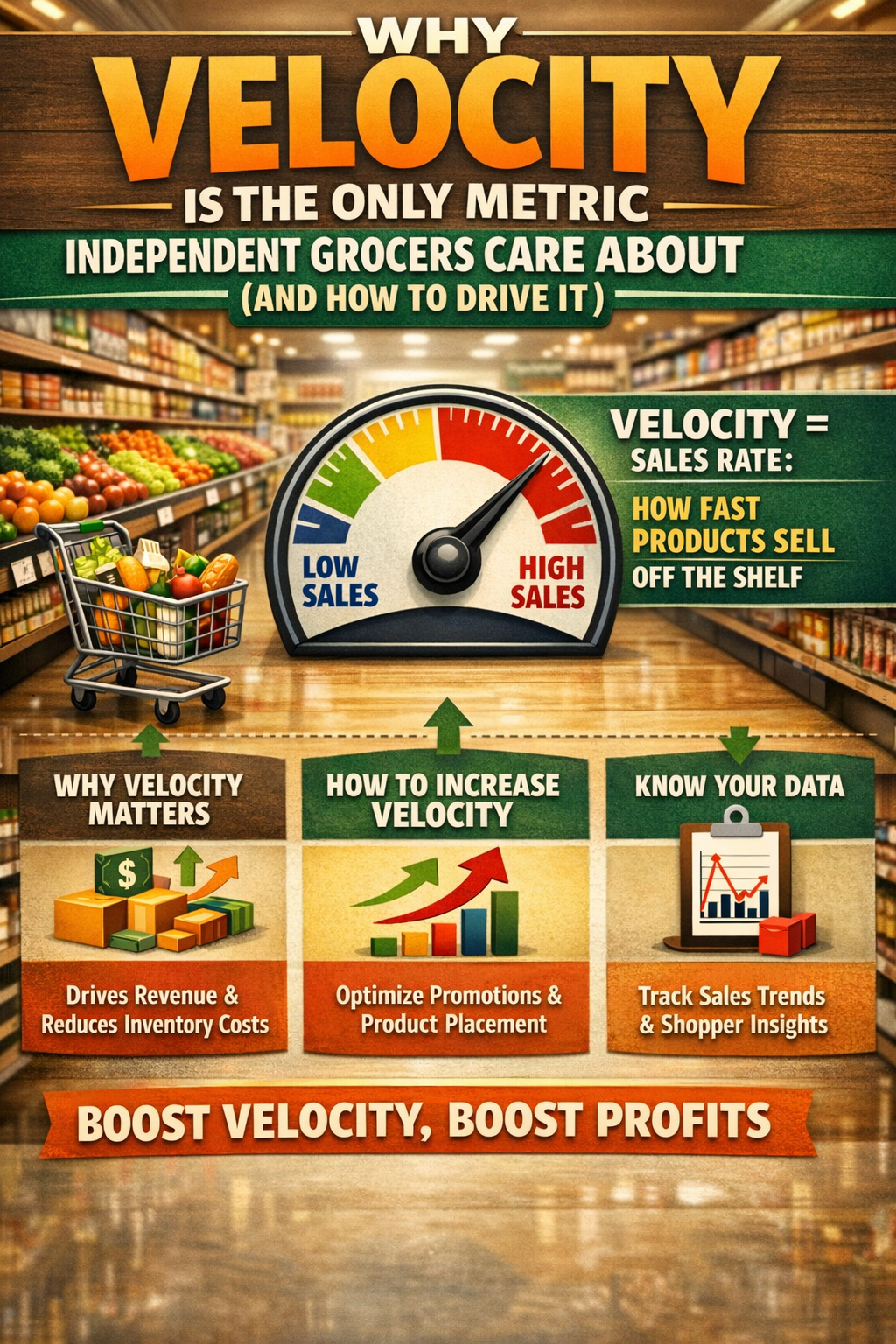
In simple terms, velocity is how fast your product moves from the shelf into a customer's shopping cart. Retailers measure this as Units Per Store Per Week (UPSW).
For an independent grocer, shelf space is like high-end real estate. They can't afford "tenants" (products) that don't pay their rent by selling quickly. If your product has high velocity, the grocer will love you, give you better shelf placement, and maybe even an end-cap display.
1. Focus on Clear, Functional Benefits
Shoppers in 2026 don't just want a "drink"; they want a solution. To drive velocity, your packaging must communicate a benefit instantly.
Take Kōbu Kombucha as the perfect example of high-velocity potential:
The "3-in-1" Power: It explicitly lists prebiotics, probiotics, and postbiotics on the label.
The Numbers: It highlights 1 Billion CFU, only 5 calories, and 1g of sugar per stick.
The Outcome: It’s positioned for the "Gut-Health Hub," helping shoppers reach a flow state and avoid the afternoon slump.
When a customer sees "Gut Healthy" and "1 Billion CFU" at a glance, the decision to buy becomes a no-brainer.
2. Leverage Sensory Marketing (The Fizz Factor)
Velocity isn't just about the first sale; it's about the repeat sale. To keep people coming back, you need to win the Sensory Audit.
Products that offer a "ritual"—like the "Just Mix | Just Move | Just Blow" process of Kōbu Kombucha Powder—create a deeper connection with the buyer.
The Sight: Watching the powder dissolve into a vibrant color.
The Feel: The effervescent fizz that tells the brain the product is "alive" and functional.
This sensory experience turns a one-time purchaser into a lifelong fan, which keeps your velocity high week after week.
3. Drive Traffic Before They Reach the Aisle
If you wait until the customer is in the store to market to them, you’ve already lost half the battle. This is where an agency like Innovar comes in.
To drive velocity, we use digital strategies like:
Geo-fencing: Sending a mobile ad to a health-conscious shopper the moment they walk into the grocer's parking lot.
Educational Content: Explaining the importance of the gut-brain axis so that when they see Kōbu on the shelf, they already know they need it.
Key Takeaways
Velocity is UPSW: Units per store per week is the only metric that guarantees you stay on the shelf.
Be Transparent: Labels must show clear benefits, like Kōbu’s 1 Billion CFU and 3-in-1 formula.
Rituals Matter: Sensory cues like the "fizz" build the habits that lead to repeat sales.
Don't Market Alone: Use a digital-to-shelf strategy to drive foot traffic.
Industry Insight: "Independent grocers have 40% less shelf space than big-box retailers. If a product doesn't hit its velocity targets within the first 30 days, it has a 70% chance of being delisted." — Retail Trends Report 2026
FAQs: Boosting Retail Velocity
What is a "good" velocity for a new CPG brand?
It varies by category, but for functional beverages, moving 5–10 units per store per week is usually considered a strong start for an independent account.
Why are powders better for velocity than heavy bottles?
Powders like Kōbu Kombucha have a smaller footprint, meaning a grocer can fit more "flavor options" in a smaller space. Plus, they are easier for customers to grab and go, fitting into the "Anti-Hustle" lifestyle.
How do I get my product into the "Gut-Health Hub"?
It starts with your formulation. You need a clean label with high CFU counts and low sugar, just like Kōbu's 5-calorie, 1g sugar profile.
Ready to Fly Off the Shelves?
If you're tired of your product sitting still, it's time to change your strategy.
Scale Your Velocity: Let’s build a data-driven retail plan for your brand. Visit Innovar Marketing Agency to start your growth journey.
Fuel Your Focus: See what high-velocity wellness looks like. Try the Lemon Ginger or Watermelon Citrus sticks at Kōbu Kombucha.