How Independent Grocers Can Build a Scalable Technology Stack Without Overspending
By George Goodwin
Running an independent grocery store means wearing many hats. You are managing inventory, pricing, suppliers, employees, promotions, customer relationships, and daily operations—all while competing with larger grocery chains that often have bigger technology budgets. The good news is that independent grocers do not need to spend millions of dollars or replace every system they already use to build a modern grocery technology stack. The smarter approach is to invest in the right technology, connect the systems you already have, and prioritize tools that solve real business problems.
A scalable grocery technology stack can help an independent grocer improve inventory management, reduce manual work, create better customer experiences, manage pricing, and make better decisions from real-time data. The goal is not to have the most technology. The goal is technology that works together and delivers measurable results.
What Is a Grocery Store Technology Stack?
A grocery store technology stack is the combination of software, hardware, platforms, and digital tools used to operate the business. For an independent grocer, that might include:
Grocery POS system
Inventory management software
Pricing and promotion software
Electronic shelf labels (ESLs)
Grocery loyalty software
E-commerce and online ordering
Payment systems
Employee and workforce tools
Customer relationship management
Analytics and reporting
Digital marketing
AI and automation
You do not need every one of these systems on day one. What matters more is how well the systems work together. For example: POS → Inventory → Pricing → ESL → Loyalty → E-commerce → Analytics. When these systems share information, your team can spend less time moving data between platforms and more time running the store.
Why Independent Grocers Should Avoid the "Buy Everything" Approach
Technology vendors often make it easy to get excited about new features. AI sounds exciting. Automation sounds exciting. Smart shelves sound exciting. Personalization sounds exciting. But buying technology simply because it is new can create a bigger problem: technology complexity. Every new platform can introduce:
Another subscription
Another login
Another data source
Another employee training requirement
Another integration
Another system to maintain
This is why independent grocers should focus on technology efficiency, not technology volume. A 2026 report on independent grocery operators found that many operators are prioritizing systems that protect margins, save employee time, and improve customer retention. The same research found that nearly half of operators struggle to connect loyalty programs to their POS systems.
The Better Question to Ask
Instead of asking:
"What technology should we buy?"
Ask:
"What problem are we trying to solve?"
That simple change can save a grocery store thousands of dollars in unnecessary technology spending.
Step 1: Audit Your Existing Technology Before Buying Anything
The first step in building a scalable technology stack is not purchasing software. It is conducting a technology audit. Create a simple list of every technology system your store currently uses.
Review Your Current Systems
Look at:
POS
Inventory
Accounting
Pricing
Promotions
Loyalty
E-commerce
Payment processing
Employee scheduling
Supplier systems
Customer data
Reporting
Marketing platforms
Then ask four questions:
What does this system do?
Who uses it?
What other systems does it connect to?
Is it actually helping the business?
You may discover that you already have technology capable of doing more than you realized.
Look for Duplicate Tools
One common problem is paying for multiple platforms that perform similar functions. For example, you may have:
One system for customer data
Another for email marketing
Another for loyalty
Another for promotions
If those systems cannot communicate, your team may spend more time managing data than using it. Integration can sometimes create more value than another software purchase.
Step 2: Build Around Your Grocery POS System
Your POS should be treated as one of the core systems in your grocery technology infrastructure. A modern grocery POS can connect sales data with:
Inventory
Pricing
Promotions
Loyalty
Payments
Customer data
Reporting
E-commerce
That makes your POS more than a checkout system. It becomes an important source of operational data.
What to Look for in a Grocery POS System
When evaluating or upgrading your POS, look for:
Real-time sales reporting
Inventory integration
Loyalty integration
Promotion management
Variable-weight product support
EBT capabilities
Digital payment support
Multi-store functionality
E-commerce integrations
Open APIs
Strong reporting
Cloud connectivity
Action Tip
Do not ask a POS provider only: "What features do you have?" Ask: "What systems can you connect to, and how does the data move between them?" That question can have a much bigger impact on your long-term technology costs.
Step 3: Connect POS and Inventory
Inventory management is one of the best places for independent grocers to create measurable technology ROI. Your POS knows what customers purchased. Your inventory system should know what is available. When those systems are connected, sales can automatically influence inventory records. That can help your team identify:
Fast-moving products
Slow-moving products
Stockouts
Overstock
Replenishment needs
Shrink
Waste
Product velocity
Why Inventory Integration Matters
Without integration, employees may have to manually compare sales reports with inventory data. That takes time and increases the possibility of errors. With connected grocery inventory management software, the store can move closer to real-time visibility.
Start Small
You don't need to automate everything immediately. Start with your most important products. For example: Top 100 SKUs → Track sales → Monitor inventory → Identify stockouts → Improve replenishment. Once that process works, expand it across more categories.
Step 4: Centralize Pricing and Promotions
Grocery pricing can become complicated quickly. Prices change because of:
Supplier costs
Promotions
Competitor pricing
Seasonal demand
Inventory levels
Loyalty offers
Markdown requirements
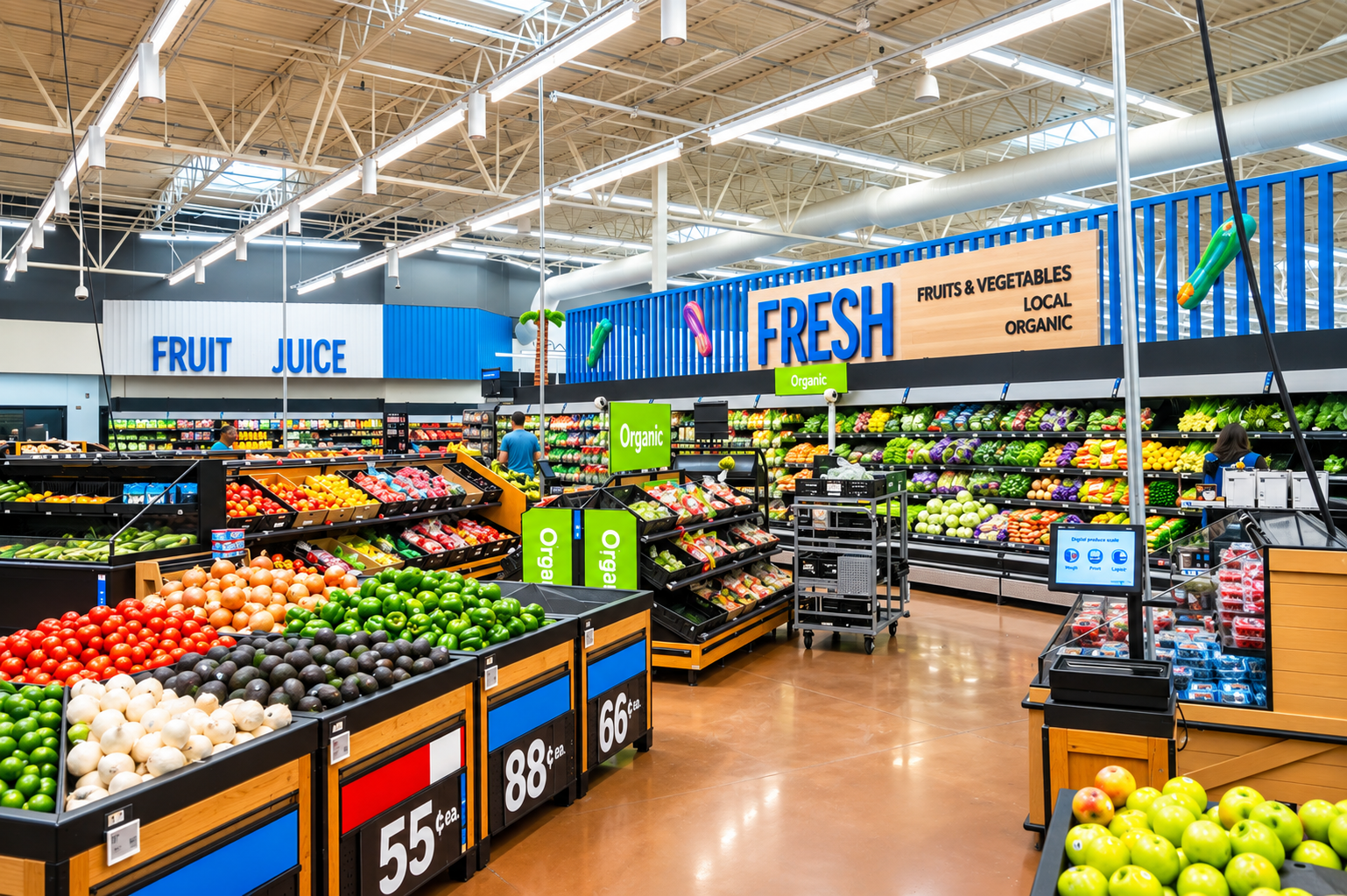
A scalable grocery technology stack should make pricing easier to manage. Ideally, pricing information should flow from one central system into the systems that need it. For example: Pricing System → POS → Electronic Shelf Labels → Online Store. This helps reduce the risk of different prices appearing in different places.
Step 5: Consider Electronic Shelf Labels When the ROI Makes Sense
Electronic shelf labels, or ESLs, can be an important part of a modern grocery technology stack. But independent grocers should not treat ESLs as a technology purchase by themselves. The real value comes from integration. A connected ESL system can allow pricing updates to flow from your pricing or POS system directly to the shelf. FMI reports that the average grocery store changes more than 7,000 price tags manually every week. ESL technology can reduce the manual work involved in those updates while improving price accuracy.
What Can ESL Technology Support?
Depending on the system, electronic shelf labels can support:
Real-time price updates
Promotions
Loyalty pricing
Product information
QR codes
Inventory visibility
Online order picking
Markdown pricing
Store operations
ESLs can also support food waste reduction. FMI reports that time-triggered markdowns on perishable products can reduce food waste by up to 21%.
When Should an Independent Grocer Invest in ESLs?
Consider ESL technology when:
Your store changes thousands of prices regularly.
Employees spend significant time replacing paper tags.
Pricing errors are a problem.
You operate multiple locations.
You want faster promotions and markdowns.
You already have systems capable of integrating with ESL technology.
If your store has very limited pricing changes, the ROI may not justify an immediate investment. The key is to calculate the business case first.
Step 6: Make Loyalty Part of Your Technology Stack
Customer loyalty technology becomes much more valuable when it is connected to transaction data. Your POS can tell you: What did the customer buy? Your loyalty system can help you understand: Who bought it, how frequently, and what else they purchase? That information can support more relevant promotions and customer marketing.
Avoid the "One Discount for Everyone" Strategy
Not every customer needs the same offer. For example: A frequent coffee buyer might respond to a coffee promotion. A family shopper might respond to a household savings offer. A health-conscious shopper might respond to a wellness or functional beverage promotion. Connected customer data makes this type of personalization possible. FMI reports that 83% of food retailers personalize marketing and shopping experiences using technology.
Action Tip
Start with simple customer segments:
Frequent shoppers
High-value customers
Lapsed customers
New customers
Category-specific shoppers
Then build promotions around actual purchase behavior.
Step 7: Connect E-Commerce to Store Inventory
If your grocery store offers online ordering, your website should not operate like a completely separate business. Customers expect online product information and availability to reflect what is happening in the store. That means connecting: Store Inventory → E-commerce → Online Orders → Fulfillment. This can improve:
Inventory visibility
Order accuracy
Product availability
Picking efficiency
Customer satisfaction
The connection becomes even more valuable when combined with ESLs and inventory systems. FMI reports that 77% of grocery shoppers are digitally engaged before shopping and 71% are digitally engaged while shopping. The modern grocery customer may move between Google, a retailer website, an app, and the physical store during the same shopping journey. Your technology needs to support that journey.
Step 8: Invest in Analytics Before Buying More Technology
Data is only valuable when you use it to make better decisions. Independent grocers should build a simple reporting system around the metrics that matter most.
Grocery KPIs to Track
Consider tracking:
Sales
Gross margin
Average basket size
Customer frequency
Customer retention
Inventory turnover
Stockout rate
Shrink
Food waste
Promotion lift
Units per store per week
Sales per square foot
Create a Simple Dashboard
You do not need a complicated business intelligence platform to start. A useful dashboard could answer: Sales: Are sales growing? Margin: Are we protecting profitability? Inventory: Are products moving? Customers: Are shoppers coming back? Promotions: Are discounts actually driving incremental sales? Operations: Where are we losing time or money? That information can guide your next technology investment.
Step 9: Use APIs to Keep Your Technology Connected
One of the most important technical considerations for a scalable technology stack is integration. When evaluating software, ask whether it has:
APIs
Data exports
Integration partners
Webhooks
Standard connectors
Cloud-based data access
You do not need to become a technology expert. But you should understand whether a platform can communicate with the rest of your technology environment.
Why APIs Matter
Imagine you purchase a loyalty platform today. Two years later, you want to connect it to a new e-commerce platform. If your loyalty software has strong APIs, that integration may be relatively straightforward. If it is a closed system, you may face additional development costs—or need to replace the platform.
Think Long-Term
A scalable grocery technology stack should not only work today. It should leave room for tomorrow.
Step 10: Don't Replace Everything at Once
This is one of the biggest opportunities for independent grocers. You don't always need a complete technology replacement. A better approach can be: Keep → Connect → Improve → Replace only when necessary. For example, your current POS may be working well. Instead of replacing it, you might first:
Improve inventory integration.
Connect loyalty.
Improve reporting.
Add pricing automation.
Connect ESLs.
Add e-commerce integration.
This approach spreads out costs and reduces operational disruption. Industry guidance in 2026 is increasingly focused on integration-first modernization rather than automatically replacing every existing system.
Common Technology Mistakes Independent Grocers Should Avoid
Buying Technology Because It Is Trendy
AI, automation, smart shelves, and personalization are powerful. But they are not automatically right for every store. Start with the problem.
Choosing Systems That Don't Integrate
A cheap platform can become expensive if your team has to manually move data between systems.
Ignoring Employee Adoption
Technology only works when employees actually use it. Choose systems that simplify workflows rather than adding more complexity.
Trying to Automate Everything
Some processes do not need automation. Automate repetitive, high-volume, error-prone tasks first.
Focusing Only on the Upfront Price
A cheaper system can become more expensive over time if it creates:
More manual work
More errors
More training
Poor reporting
Integration problems
Look at total cost of ownership, not just the monthly subscription.
The Role of AI in an Independent Grocery Technology Stack
AI can become valuable once the underlying systems are connected. Retail technology is increasingly moving toward connected systems, real-time data, and AI-supported decision-making. NRF notes that retailers are focusing on scaling AI and connecting systems so technology can improve operational decisions and customer experiences. Independent grocers can consider AI for:
Demand forecasting
Inventory optimization
Customer segmentation
Personalized promotions
Marketing content
Pricing analysis
Sales forecasting
Reporting
Fraud detection
How to Keep Technology Costs Under Control
Here are some practical ways independent grocers can control technology spending.
1. Prioritize High-ROI Projects
Fix the problems costing the most money first.
2. Negotiate Implementation Costs
Ask vendors about:
Setup fees
Integration fees
Training
Hardware costs
Contract length
Volume discounts
3. Avoid Unnecessary Customization
Custom development can become expensive quickly. Use standard integrations when they meet your needs.
4. Consolidate Where It Makes Sense
If one platform can reliably replace three disconnected tools, consolidation may reduce costs.
5. Review Your Software Annually
Technology subscriptions can quietly accumulate. Once a year, review every platform and ask: Are we still using this? Is it delivering measurable value? Can another system already do this?
Key Takeaways
Start with business problems instead of shopping for technology.
Build around your grocery POS system and core operational data.
Connect POS, inventory, pricing, loyalty, and electronic shelf labels where possible.
Avoid replacing systems that are still working well.
Prioritize integrations and open APIs when choosing new software.
Invest in technology in stages instead of all at once.
Measure ROI through labor savings, margin improvement, waste reduction, sales, and customer retention.
Add AI and automation only when they solve a specific business problem.
Build a technology stack that can scale as your store or business grows.
The average U.S. supermarket carries approximately 32,000 unique products and changes more than 7,000 price tags by hand every week. Digital shelf labels can help automate pricing updates, improve accuracy, and reduce manual work. — Food Marketing Institute (FMI)
The Future of Independent Grocery Technology
The future is not necessarily about buying more technology. It is about creating a connected grocery operation. Retail technology is moving away from isolated pilots and toward systems that connect data, operations, customer experiences, and decision-making. That creates an important opportunity for independent grocers. Large chains may have bigger budgets, but independent retailers can compete by being more focused and more agile. A well-designed technology stack can help an independent grocer:
Operate more efficiently
Understand customers better
Reduce waste
Improve pricing accuracy
Protect margins
Make faster decisions
Deliver better customer experiences
Final Thoughts
Independent grocers don't need to outspend large grocery chains on technology. They need to outsmart their technology strategy. Start with the systems you already have. Connect them. Fix the biggest operational problems. Measure the results. Then invest in the next layer. The best grocery technology stack is not the one with the most software. It is the one that gives your team better information, removes unnecessary manual work, and helps the business grow without creating unnecessary complexity.
If you are evaluating grocery technology, POS systems, inventory management, electronic shelf labels, loyalty software, or a broader retail technology strategy, Innovar Marketing Agency can help you build a practical technology and marketing strategy around your business goals.
For grocery, CPG, and retail growth strategies, visit www.innovaragency.com. And if you're looking for a modern functional beverage brand built around convenience, wellness, and everyday use, explore Kōbu Kombucha at www.enjoykobu.com.