He Ran 178 Miles Alone Through the Sierra Nevada. Here's What He Learned About the Human Mind.
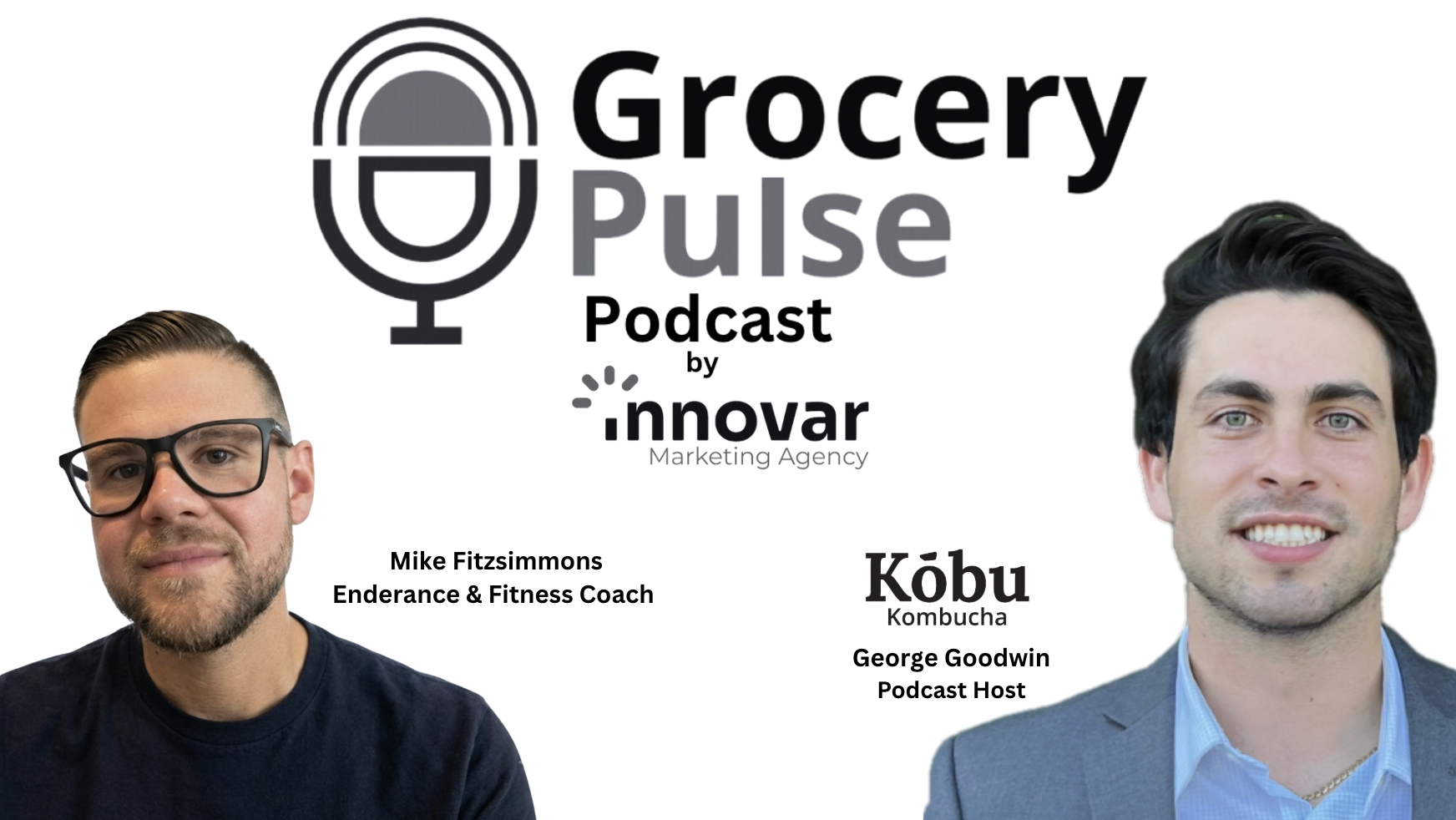
Published by Innovar Marketing Agency | GroceryPulse Podcast, hosted by George Goodwin
🎙️ COMING SOON [Listen to the full episode here → PODCAST LINK PLACEHOLDER]
Overview
Most people will never run a marathon. Mike Fitzsimmons ran nearly seven of them back to back — alone, through the Sierra Nevada mountains, across 45 hours and 5 minutes, with one 20-minute nap.
In this episode of GroceryPulse, host George Goodwin sits down with Mike Fitzsimmons — known at the Reno running community as "Fitz" — who just became only the second person in history to complete the Reno Tahoe Odyssey as a solo runner. The first did it 12 years ago. No one had done it since.
But this episode isn't really about running. It's about what happens to your mind when your body wants to quit, what role your tribe plays in your success, how a vegan diet fueled one of the most demanding endurance events in the country, and what lessons an ultra-endurance athlete's mindset has for anyone trying to do something hard — whether that's building a business, leading a team, or just getting out of bed for that first 5K.
What Is the Reno Tahoe Odyssey?
Before we get into the mindset lessons, it helps to understand what Fitz actually did. The Reno Tahoe Odyssey is a 178-mile loop through the Sierra Nevada mountains, starting and ending in downtown Reno, Nevada. It takes runners west through Truckee, California, along the west shore of Lake Tahoe past Emerald Bay, down to South Lake Tahoe, up and over Kingsbury Grade, through the historic state capital of Carson City, up to the old mining town of Virginia City — home to the steepest climb of the entire course — and then back down into Reno. Most teams run it with 12 people. There's also an ultra division for teams of six or fewer. Only one person had ever run it solo before — a man named Juan, 12 years ago. Fitz is the second.
"It's a 178-mile loop through the Sierra Nevada mountains. The Virginia City climb, they call that Gold Hill — that's the steepest climb in the race. And to hit it that late in the race is very challenging." — Mike Fitzsimmons
He ran the entire thing with a pacer alongside him (required by the race's solo rulebook) and two follow vehicles. He took one nap. It lasted 20 minutes.
"I felt great, actually. Believe it or not, I was rejuvenated. When you're that wrecked, 20 minutes can do so much."
Oh — and he got lost around mile 80 and added four extra miles to the course. He still beat the previous record by two hours.
The Mental Game Is Everything
Fitz is clear about this: the physical pain was real — the worst of his life, he says — but the mental game was what actually determined whether he finished.
"The mental game was way more important to be able to master. It was really hard, especially in the beginning, to stay present and run the mile I was in — and not think, 'my God, I have to climb up Virginia City tomorrow.'"
He noticed something important early on: the moment he stopped being present and started projecting forward — thinking about how far he still had to go, what the next climb looked like, whether he could make the record — everything got worse. The pain felt sharper. The fatigue felt heavier. The voice telling him to quit got louder.
"When I was staying present and simply running the mile I was in and saying, 'dude, nothing right now is really that bad' — it was a lot easier. You're creating problems before they're even happening."
This applies directly to business, leadership, parenting — anything with a long horizon and uncertain outcome. The moment you mentally skip to step nine of a ten-step process, you make the step you're actually on harder than it needs to be.
The Three Versions of Yourself
Around mile 60, Fitz was in serious trouble. A posterior chain hamstring cramp was turning his foot inward, forcing him to run on his ankle for roughly 15 miles. He had his quit speech ready. He knew exactly what he was going to say to his crew. Then he arrived at the aid station, and his crew did something that changed everything: they didn't ask how he was feeling. They just asked what he needed.
"They were just like, 'Hey, what do you need? Let's get you set up for the next one.' They didn't even ask me how it's going. They were like, 'What do you need to continue? Because we're gonna keep doing this thing.' And before I knew it, I was out on that next leg."
But the crew alone didn't carry him. Fitz had developed a mental framework for exactly these moments — one that's worth keeping. He calls it the three versions of himself:
"I feel like I have three versions of myself. I have present me that might be hurt, might be cramped up, might be tired. I have past me that for some reason set this goal and was really serious about it. And I have future me that's gonna be really stoked if I don't quit. So I just take present me out and think about past me who set the goal, and future me who really needs me to finish."
When you want to quit something — a training plan, a business goal, a hard conversation — the question isn't "do I feel like doing this right now?" The question is what the version of you that finished would say to the version of you who's considering stopping.
Your Tribe Revives You
One of the most direct, memorable lines in the episode:
"Your tribe revives. Who you surround yourself with greatly impacts your self-motivation. In a race, in life — who you surround yourself with matters."
This wasn't a throwaway motivational line. Fitz told his crew he was quitting — mentally, at least- multiple times. They never gave him an out. They never asked how he was feeling. They just assumed he was continuing and asked him what he needed to do that. That's a specific, trainable leadership skill: asking "What do you need?" instead of "How are you doing?" The first question assumes forward motion. The second opens a door to stopping.
Everything Is Temporary — Highs and Lows
The mantra Fitz kept returning to throughout the race:
"Everything's temporary. The lows, the highs. If you're in a low, it's not gonna last forever. And on the other side — if you're on a hot streak, know that might be temporary too and enjoy it, because it won't last forever either."
He said this framework helped him relish the good miles just as much as it helped him survive the bad ones. When things were going well, he appreciated them more because he knew they'd pass. When things were going badly, he trusted they'd pass too. For anyone leading a team or running a business: this is emotional regulation at its most practical. The bad quarter doesn't last forever. Neither does the good one. Both deserve your full attention right now.
The Fuel: What a Vegan Ultra-Endurance Athlete Actually Eats
This is a podcast that cares about food, so let's talk about what Fitz consumed over 45 hours of running — and what a vegan ultramarathon training diet actually looks like.
During the race:
60 to 80 grams of carbohydrates per hour — through gels, potato chips, gummies, candy
Solid food, including ramen, mashed potatoes, and peanut butter pretzels (his personal favorite — salty, a little sweet, a touch of protein, though he notes you need to stay hydrated because they dry out the mouth)
Small amounts of protein throughout, because 45 hours is too long to avoid it entirely
"Carbs are king. As a simple answer, that's it."
Training diet (January through June):
60 to 65% carbohydrates — pasta, pizza, rice and tofu
Running 70 to 85 miles per week, often at 3 or 4 AM before a 10-hour workday
Post-race recovery:
Protein-heavy eating for the first two to three weeks
No running for 10 days, then easy miles, then — three weeks after completing 178 miles — a 46K mountain race with 10,000 feet of climbing
Supplements:
B12 and iron (required on a vegan diet)
A daily multivitamin
Nothing else
Fitz has been vegan for seven to eight years. The switch came after attending a cycling camp run by Tyler Pierce — known as "the vegan cyclist" — where all meals were plant-based. He felt better on the bike than he ever had, came home, and never went back.
"If it has a face, I don't need it. Or if it came from something with a face, I don't need it."
The Prize Is in the Struggle
Perhaps the most quietly powerful moment in the episode comes near the end, when George asks Fitz where the real reward was — in the journey or the finish line.
"The real reward, a hundred percent, was in the struggle, in the journey. That finish line moment was so beautiful — my mom was there the whole 45 hours, she was my crew chief. But think about it: that moment lasted an hour. I was out there for 45 hours. I have to enjoy that."
He also says something that should stop anyone who's been grinding toward a goal and forgotten why:
"I kinda miss those 4 AM, 3 AM morning runs. Because that's where the real prize is. It's in the struggle. I'm glad the pain's over. But I'm glad it happened, because it proved to me that if it happens again, I can push through it."
The finish line is one hour. Everything leading to it is the experience. This applies to any goal worth having.
The Origin Story: From Overweight Kid to Record-Breaker
Fitz didn't come from athletics. He was an overweight kid who hated PE class, pretended to be sick to avoid it, and didn't really have a thing growing up.
"I didn't get bullied or anything, but I also didn't really have a thing. I didn't play sports, I wasn't really good at much, and I didn't have a lot of friends. Running has changed my life. I've been to Berlin, Asia — all of my best friends come from running."
He found running through cycling, found cycling through community, and built everything from there. The Odyssey wasn't just a race — it was a tribute to what running gave him.
"It was almost like a tribute to what running's done for me. It was never about running. It was about what running gave me."
This is a story that matters far beyond endurance athletics. Find your thing. The thing doesn't have to be running. It just has to be yours.
Rapid Fire Highlights
Favorite recovery meal: Tofu and rice with teriyaki sauce and a hefty helping of nutritional yeast ("nooch") on everything
Favorite grocery store snack: Ranch-flavored crunchy edamame
Coffee or energy drinks: Coffee, always — a latte if it's a good coffee shop
Most memorable mile: Mile 100 of a separate race in LA — he needed a sub-33-hour buckle, crossed in 32 hours, 59 minutes, and 30 seconds. His pacer told him to go. He went.
Most important nutrition tip: Calories in, calories out — works for weight loss and for endurance athletes making sure output and intake match
Most important mindset tip: Think about future you. Would that person be proud of the decision you're about to make?
What This Means Off the Trails
Fitz says it clearly at the end of the episode:
"We procrastinate way too much. There's something to be said about just doing whatever it takes to get it done this time. Don't wait till the time is right. Don't wait till you're ready."
And:
"The only way to grow is the hard way. Whatever's next for me is gonna have to be harder than what we did last time. That both scares and excites me."
For grocery executives, CPG founders, entrepreneurs, and anyone working toward something that feels too big — this episode is a useful recalibration. The conditions for starting will never be perfect. The hard thing will always feel harder than you thought. The finish line will feel shorter than the journey. Do it anyway. Do it now. Run the mile you're in.
Key Takeaways
Stay in the mile you're in — projecting too far ahead makes everything harder, whether you're running 178 miles or building a company
Your tribe either revives or drains you — the people around you during hard moments matter more than you think
Everything is temporary — the lows and the highs, and knowing that changes how you face both
Think about future you — when you want to quit, ask yourself what the version of you that finished would say
Don't wait until you're ready — the conditions will never be perfect. Do the hard thing now
Carbs are king during effort, protein is king in recovery — a simple framework that applies far beyond running
Start slower than you think you need to — and if you think you're going slow enough, go slower
Listen to the Full Episode
🎙️ GroceryPulse | Episode: Mike "Fitz" Fitzsimmons — Solo Reno Tahoe Odyssey Finisher 👉 COMING SOON [Listen here → PODCAST LINK]
About GroceryPulse
GroceryPulse is hosted by George Goodwin, fourth-generation grocer and founder of Kōbu Kombucha Powder. Each episode features leaders, athletes, and innovators shaping the food, retail, and performance industries. Subscribe wherever you listen to podcasts.
🔗 Kōbu Kombucha Powder → enjoykobu.com 🔗 Goodwin's Organics → goodwinsorganics.com 🔗 Innovar Marketing Agency → innovargroup.com 🔗 Reno Tahoe Odyssey → renotahoeodyssey.com
About Innovar Marketing Agency
Innovar is a full-service marketing agency specializing in grocery, CPG, and independent retail. We help brands and retailers tell better stories, reach more customers, and grow with purpose.
🔗 [Work with Innovar → INNOVAR CONTACT LINK PLACEHOLDER]
Tags: ultramarathon, endurance running, Reno Tahoe Odyssey, Mike Fitzsimmons, GroceryPulse, George Goodwin, mindset, vegan athlete, mental toughness, performance nutrition, gut health, Kōbu, running, resilience, leadership

🎧 Listen to GroceryPulse YouTube | Spotify | Apple Podcasts
🤝 Connect with the Guests Mike Fitzsimmons — Instagram
fitzcoaching@gmail.com
George Goodwin — LinkedIn george@innovaragency.com | www.enjoykobu.com
🌐 Explore Innovar Podcast Guest → innovaragency.com/grocerypulse
podcast@innovaragency.com
george@innovaragency.com
Let’s push the industry forward!